Sales
Upselling and Cross-Selling to Existing Customers: A Simple CRM Approach
· ATTPL CRM Team
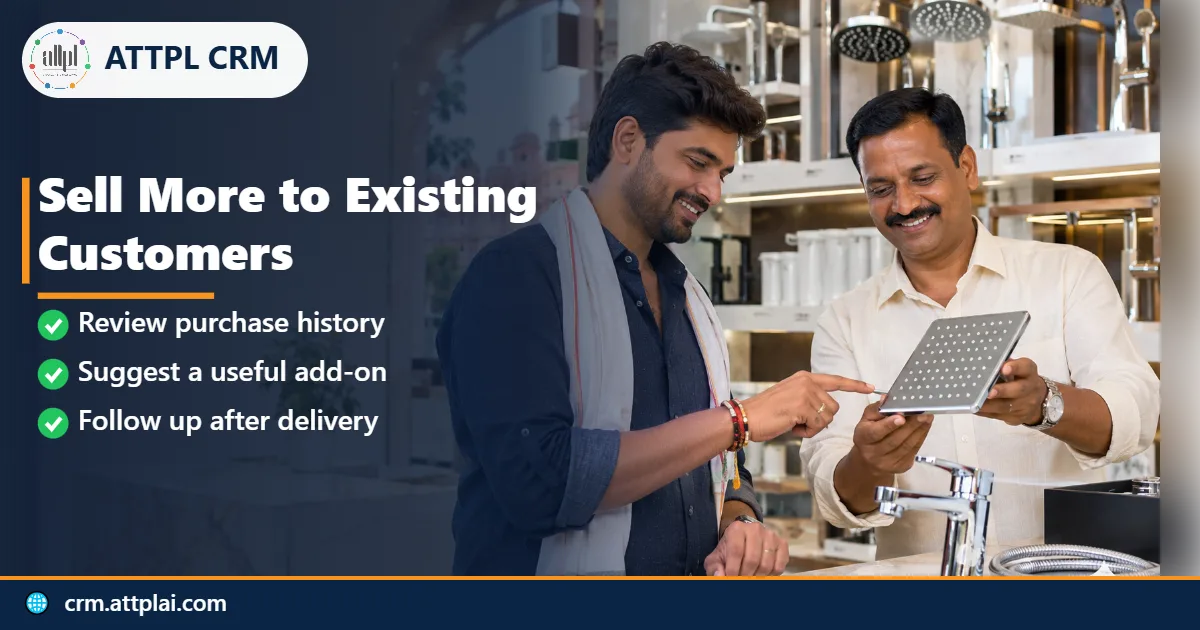
Finding a new customer takes advertising, calls, visits and time. Selling something more to a customer who already trusts you is usually easier, because the relationship exists. Upselling and cross-selling are the two ways to do this, and when they are done honestly they help the customer as much as the business. The problem is that many small businesses either never try, or try in a pushy way that hurts trust. A CRM gives you the history to do it well.
Upselling and cross-selling: the difference
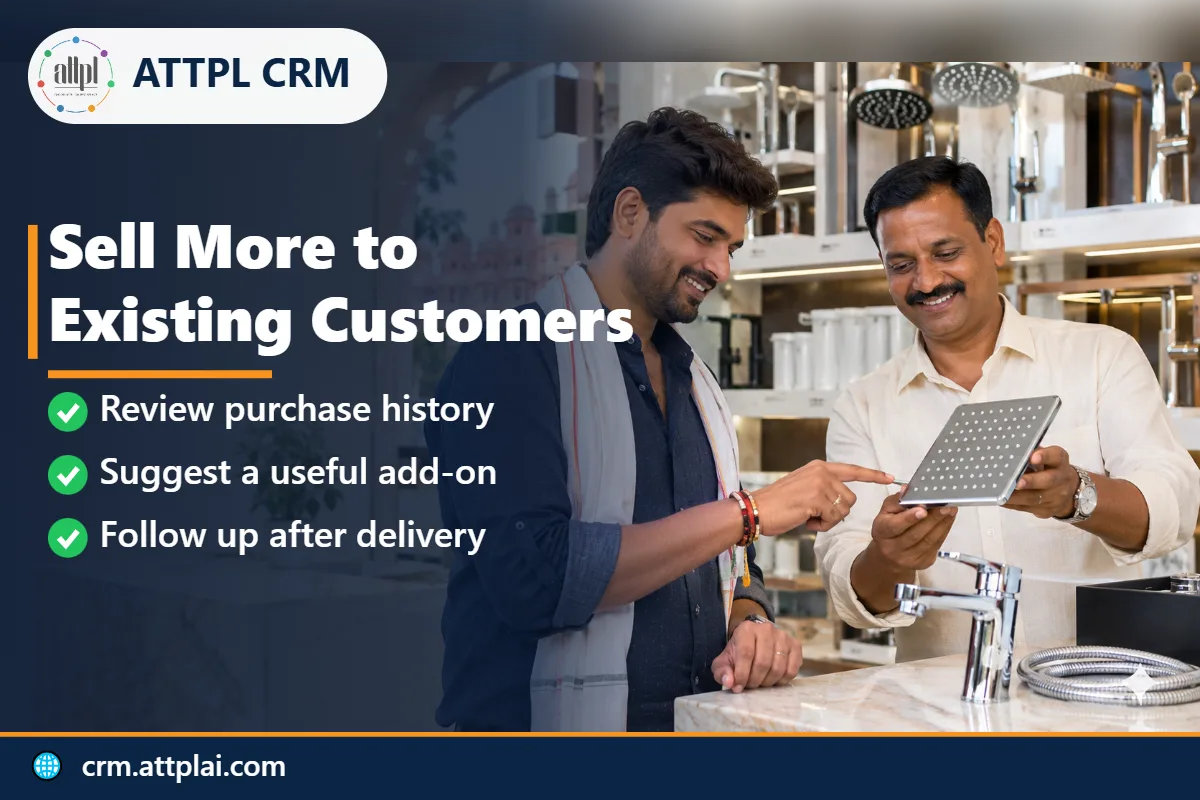
Upselling means offering a better, larger or more complete version of what the customer is already buying, such as a higher-capacity model, a longer service plan or a premium pack. Cross-selling means suggesting a related product or service that goes with the original purchase, such as a cover with a phone, or installation with an appliance.
Both are only useful when they solve a real need. If the customer does not need it, do not offer it.
Start with the customer record
You cannot suggest the right thing without knowing the customer. Make sure your CRM holds the basics for every customer:
- What they bought, when, and for how much
- Which product or service they use now, and when it needs renewal or replacement
- Their city, industry or customer type
- Past complaints, discounts and feedback
- The main contact person and the decision maker
If this information is currently in notebooks or spreadsheets, move it into the CRM first. Without a clean record, any offer you make will be a guess.
Group customers before you plan offers
Do not send the same offer to everyone. Divide customers into a few simple groups, for example by what they bought, how often they buy and how much they spend. Our guide to customer segmentation for small businesses explains how to do this with the CRM filters and tags you already have.
Then ask one question for each group: what is the most natural next purchase for these people? A customer who bought a machine may need consumables and a service contract. A customer who bought a basic plan may be ready for a larger one after a year of use.
Choose the right moment
Timing decides whether an offer feels helpful or annoying. Good moments include:
- After successful delivery or installation, when the customer is happy
- When a plan, warranty or contract is about to end
- When the customer's usage has grown and the current product is no longer enough
- When you launch something that fits their earlier purchase
- After a problem has been solved well, because trust is high
Poor moments include the middle of an unresolved complaint, or an unpaid invoice. Check the customer's status in the CRM before you call. It also helps to keep a gap between offers, so that a customer who has just said no is not contacted again the next week.
Build a small, honest offer
Keep the offer simple. One main suggestion, with a clear benefit in the customer's own language, works better than a long list. Explain what changes for them: saves time, lowers running cost, gives longer cover or avoids a future problem. Be clear about the price and about anything that is not included. Do not exaggerate, and do not push if the customer says no. A polite 'no' today can become a 'yes' later, if you stay respectful.
Write the offer in a quotation that is easy to read; see our guide to quotations and proposals in a CRM.
Plan the follow-up in the CRM
Create a task for each customer group with a date, an owner and a script. Record the result of every conversation, including the reason for a refusal. After a few weeks you will see which offers worked and which did not. Share the learning with the whole team, and stop offers that do not suit your customers. For example, if customers who bought a service plan renew more often than those who did not, make that plan the first suggestion for every new buyer. If a particular add-on always gets refused, either improve how you explain it or remove it from your list.
Think about long-term value
A customer who buys several things from you over many years is worth far more than the first order suggests. Look at the number of purchases and the time they stay with you. Our guide to customer lifetime value can help you decide how much effort each customer group deserves. Never trade long-term trust for a quick extra sale.
Train the team and measure
Explain to your salespeople that the aim is to help customers, not to push products. Role-play a few conversations, and agree what a respectful follow-up looks like. Each month, check how many existing customers bought something additional, which offers they accepted and whether complaints increased. If complaints go up, you are pushing too hard.
Frequently asked questions
Is upselling the same as pressure selling?
No. Good upselling is a useful suggestion that matches the customer's need. If the customer refuses, accept it politely.
How often should we contact existing customers with offers?
Contact them when there is a real reason, such as renewal, a new need or a relevant new product. Avoid sending offers every week.
Can a small business do this without special software?
Yes, you can start with notes and a spreadsheet, but a CRM makes it easier to keep history, tasks and reminders in one place.
Sources
This article is general business information and is not legal advice. Advertising, pricing and consumer protection rules may apply to your offers, so check them with a qualified professional if needed.
Organise your customer relationships
Leads, contacts, follow-ups and pipelines in one workspace for Indian businesses.